Softr is built for non-technical teams that need client portals, internal tools, and CRMs on top of their own data. It's one of the top AI app builders, but no tool fits every use case. Native mobile apps, pixel-level design control, and developer-led internal tools are better served elsewhere. This list compares six alternatives based on their databases, permissions, pricing at scale, and who can maintain the app.
Best Softr alternatives at a glance
How I evaluated Softr alternatives
I tested and compared each of the Softr alternative on this list using these five criteria:
- Data: Whether it ships its own database, connects live to the tools you already use, or expects you to migrate.
- External users: Whether clients, vendors, and partners can log in, and what each one costs.
- Permissions: Whether different users can see different records, not just different pages.
- Cost at scale: What the bill does once real users and daily activity arrive.
- Maintenance: Whether a non-technical teammate can keep the app running after launch.
1. Glide — for mobile-first apps built on spreadsheets
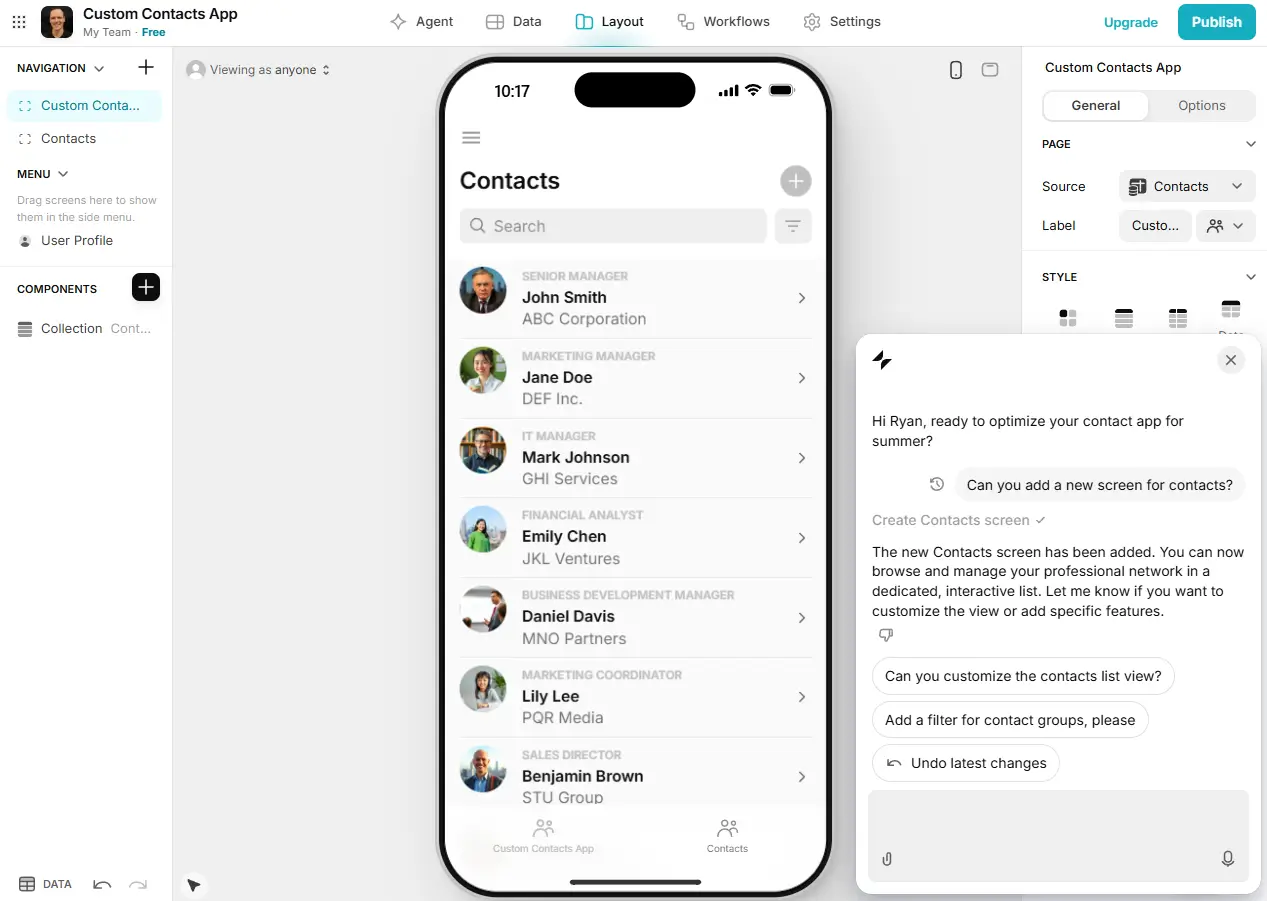
Bottom line: Glide converts spreadsheets into mobile-friendly apps. It now sells two separate products: GlideOS, an AI builder that launched in August 2026, and Glide Classic, the original no-code builder. Each has a separate subscription.
Where Glide beats Softr:
- Polished mobile layouts with very little design work
- Glide Classic's Maker plan allows unlimited users with personal email addresses for $49/month, billed annually
Where Softr is better:
- Users with company email addresses don't need a high-tier plan. On Glide Classic, they require Business at $199/month
- Airtable connects on Softr's Free plan, but not on Glide's
- Glide Classic meters every sync from an external data source as an "update", charged at 2¢ each over your limit
Who Glide is not for: Teams building portals for clients on company email domains, or apps that combine several data sources.
Pricing: Glide Classic has a Free plan for drafts, then Explorer at $19/month, Maker at $49/month, and Business at $199/month, billed annually. GlideOS has a Free plan, then Basic at $25/month and Plus at $50/month.
Verdict: Choose Glide if your app is mostly for people on mobile and your data is stored in a spreadsheet.
👉 See this Softr vs. Glide page for a more in-depth comparison.
2. Noloco — for very large client lists on a single plan
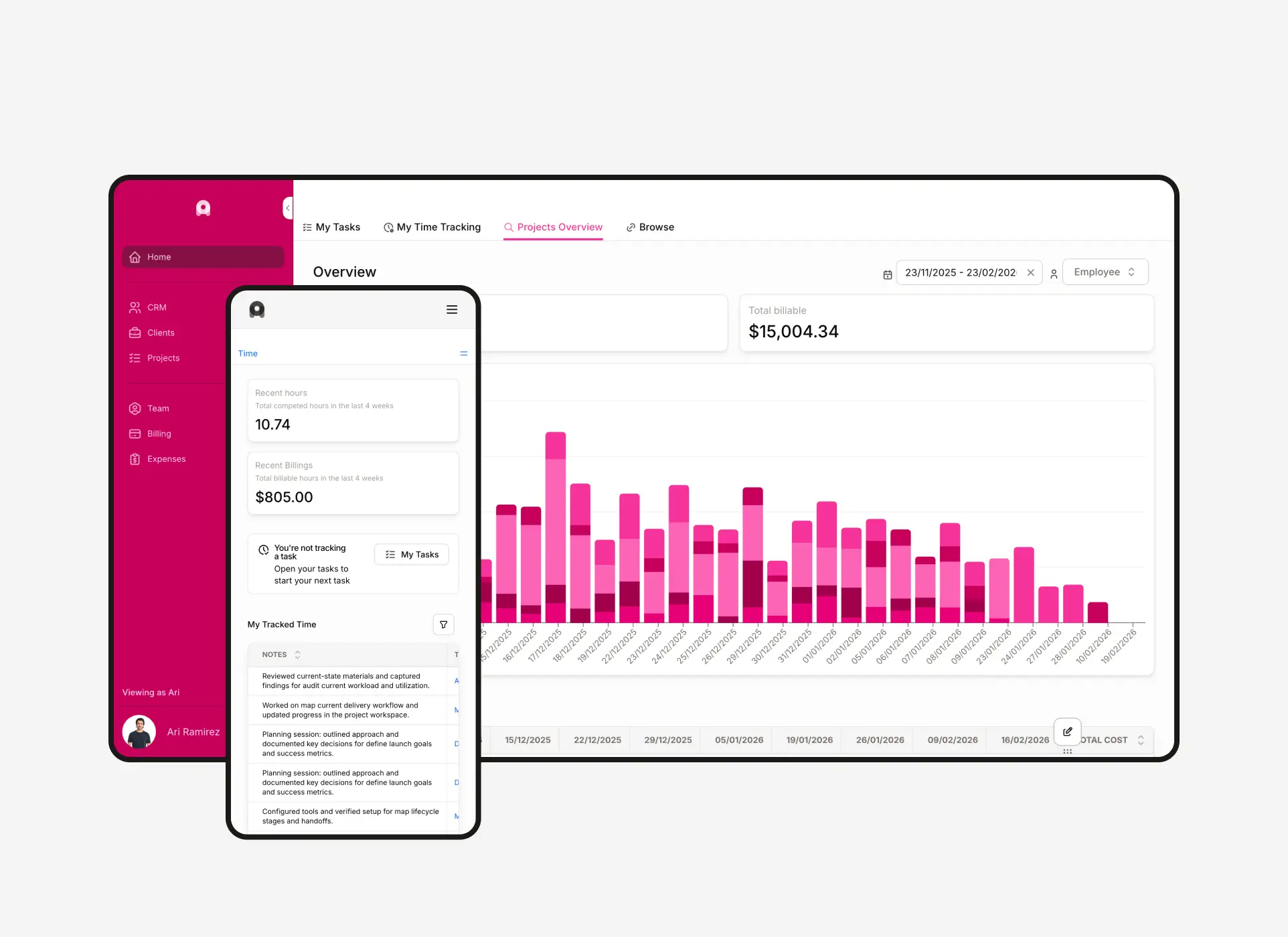
Bottom line: Noloco builds client portals and internal tools on its own Noloco Tables or on synced sources like Airtable, SmartSuite, and Postgres. It's the closest tool here to Softr in intent.
Where Noloco beats Softr:
- Live sync with HubSpot, Postgres, MySQL, and Supabase on its single paid plan. On Softr, HubSpot and SQL sources start on Business
- Unlimited user roles on Build
Where Softr is better:
- Noloco's Free plan only works with Noloco Tables and CSV import, while Softr's Free plan connects to Airtable, Google Sheets, Notion, and more
- Softr's AI Co-Builder generates the database, pages, and permissions from a prompt
- There's no step between Noloco's $65 Build plan and custom Enterprise pricing, so SSO and audit logs require scheduling a sales call
Who Noloco is not for: Teams that want to start free on an existing Airtable base or Google Sheet.
Pricing: Free plan with 50 active clients and 2,000 records. Build is $65/month billed annually ($79 monthly), with Enterprise on custom pricing.
Verdict: Choose Noloco if your portal has hundreds of client users and your team fits within its 10 included seats.
👉 See this Softr vs Noloco page for a more in-depth comparison.
3. Stacker — for AI agents with customer portals included
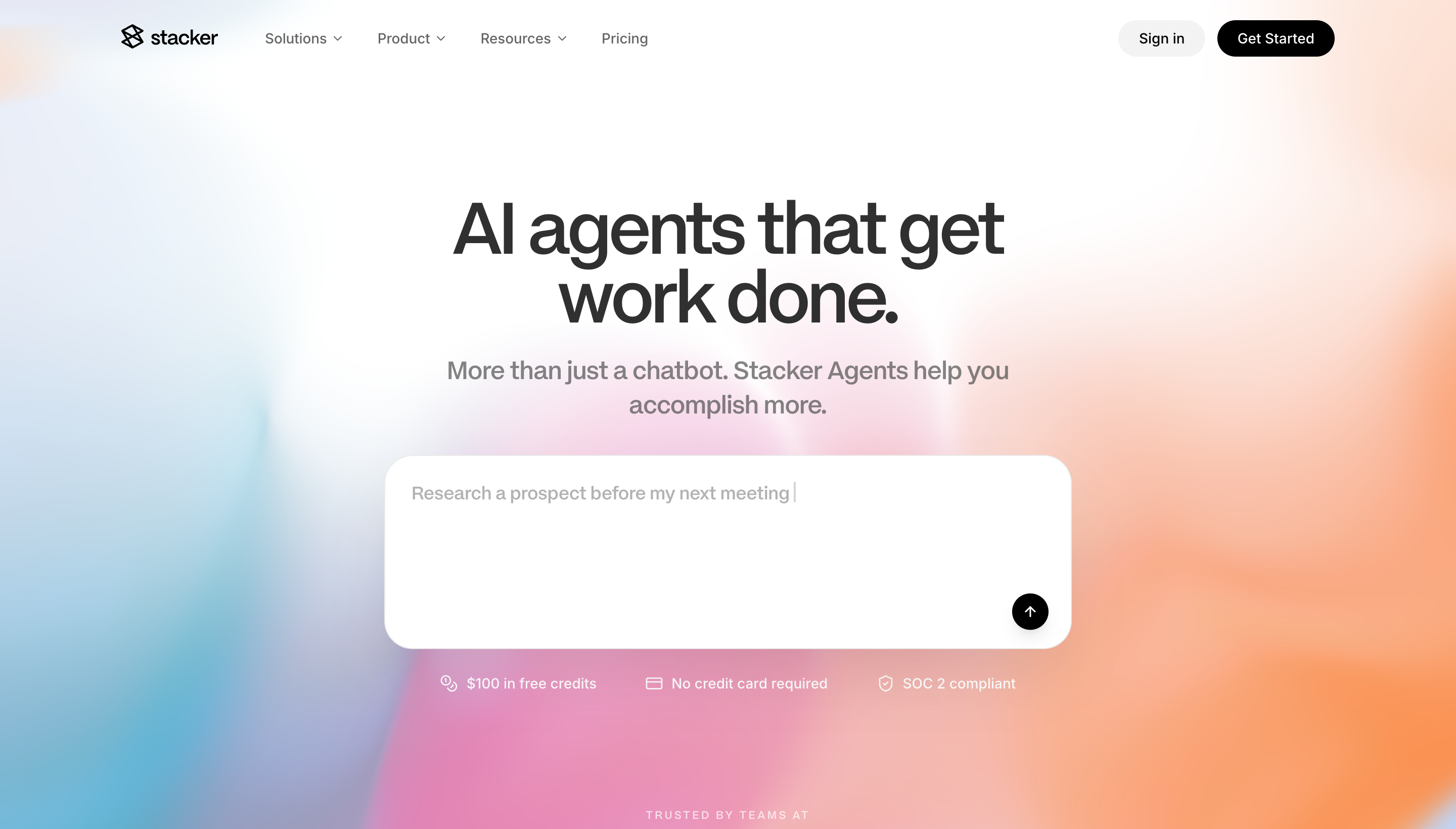
Bottom line: Stacker started as a way to build apps on top of Airtable. It now sells AI agents that carry out tasks across your tool stack, with white-label customer portals still included in its plan.
Where Stacker beats Softr:
- Unlimited white-label portals and custom domains on its single paid plan
Where Softr is better:
- Softr is built around apps and data, with a native database and live connections to 21+ external sources
- Plan-based pricing with AI credit rollover
- Softr has a generous Free plan with unlimited apps and databases included
Who Stacker is not for: Teams that want a dedicated portal or internal tool builder, rather than an agent platform.
Pricing: Free trial with $100 in credits. The Standard plan starts at $50/month for 250 credits and scales to $2,000/month for 10,000 credits, with Enterprise on custom pricing.
Verdict: Choose Stacker if you mainly want AI agents to run work across your tools (with customer portals as a secondary need).
4. Retool — for developer-built internal tools
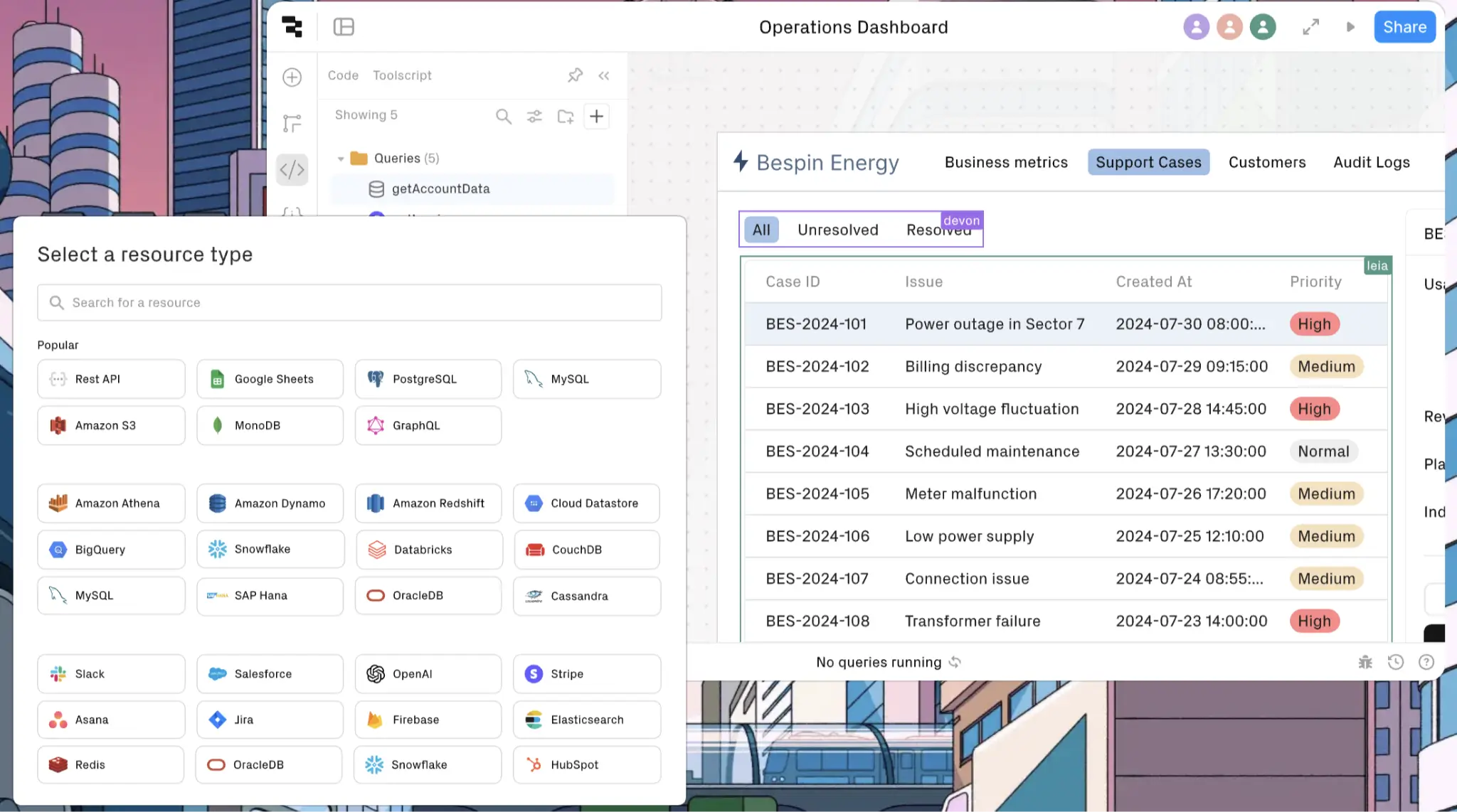
Bottom line: Retool is a developer-first platform for internal tools, workflows, and agents on top of databases and APIs. In June 2026 it added an AI app builder that can be used to generate React and TypeScript apps.
Where Retool beats Softr:
- Full control with SQL and JavaScript, plus self-hosting
- Native mobile apps for iOS and Android, with offline mode and push notifications
- Connects to almost any database or API your engineers might use
Where Softr is better:
- A non-technical team can build and maintain the app. Most Retool apps need someone who writes SQL or JavaScript
- Client users work on Softr's Basic plan; Retool's Team plan does not include external users
- Plan-based pricing
Who Retool is not for: Business teams without engineering support, or anyone building a client-facing portal on a small budget.
Pricing: Free for up to 5 users. Team is $10/builder plus $5/internal user per month, and Business is $50/builder plus $15/internal user per month, billed annually. Business includes 50 free external users.
Verdict: Choose Retool if engineers will build and own the tool. It gives highly technical users a lot of control, but at the cost of speed and ease of use.
5. Bubble — for custom web and native mobile products
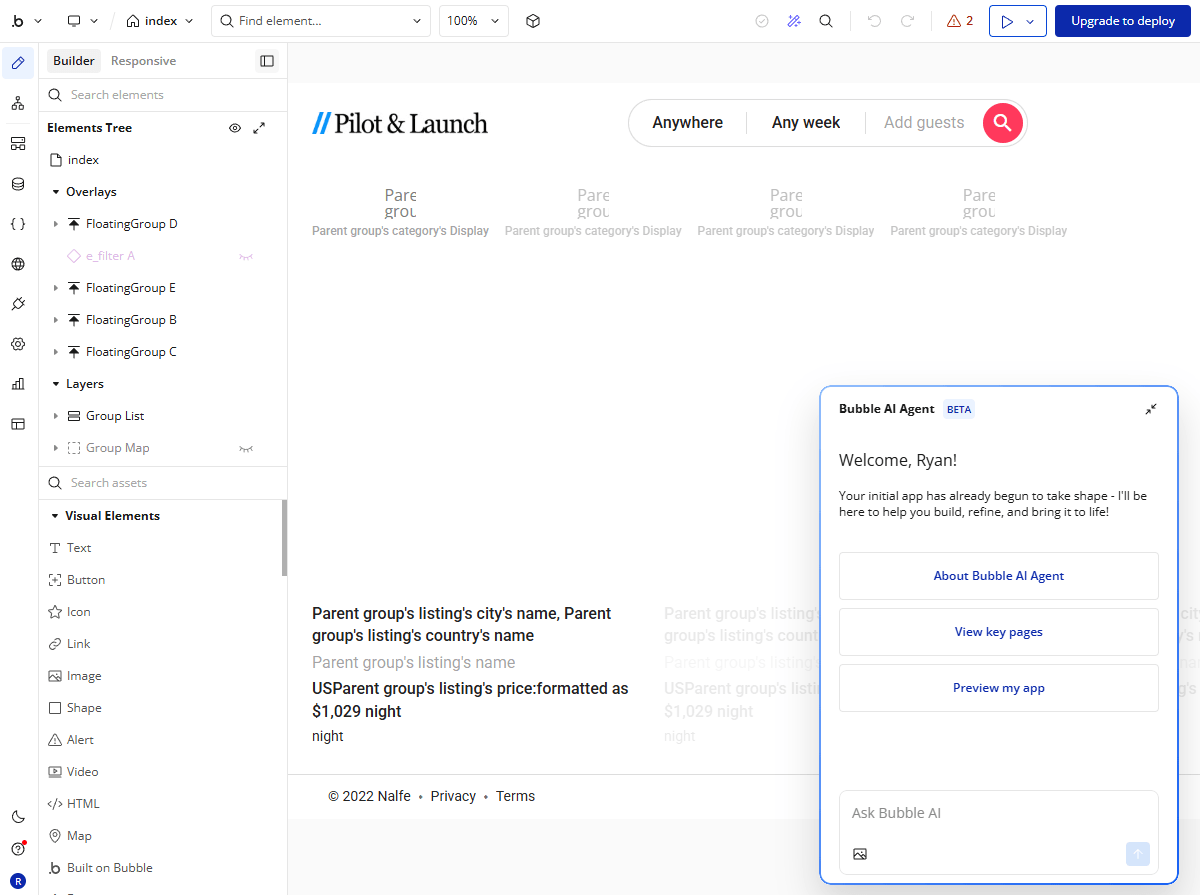
Bottom line: Bubble is a full-stack builder for custom web and native mobile apps. It's better suited for products and SaaS than internal tools or client portals.
Where Bubble beats Softr:
- Pixel-level design control over every element on the page
- Native iOS and Android apps from the same project, published to the app stores
Where Softr is better:
- Faster for building internal tools or portals with authentication and permissions built in
- Predictable plan pricing. Bubble meters server usage in workload units, which makes costs hard to forecast
- Login pages and permissions come built in
Who Bubble is not for: Teams building an internal tool or client portal, rather than a SaaS product they plan to sell.
Pricing: Free plan for development. Starter is $59/month, Growth is $209/month, and Team is $549/month, billed annually. Each plan covers one project, and Web and Mobile plans are either bundled or billed separately.
Verdict: Choose Bubble if you're building a custom product and have ample time to learn the platform properly.
6. Airtable Interface Designer — for simple views on an existing Airtable base
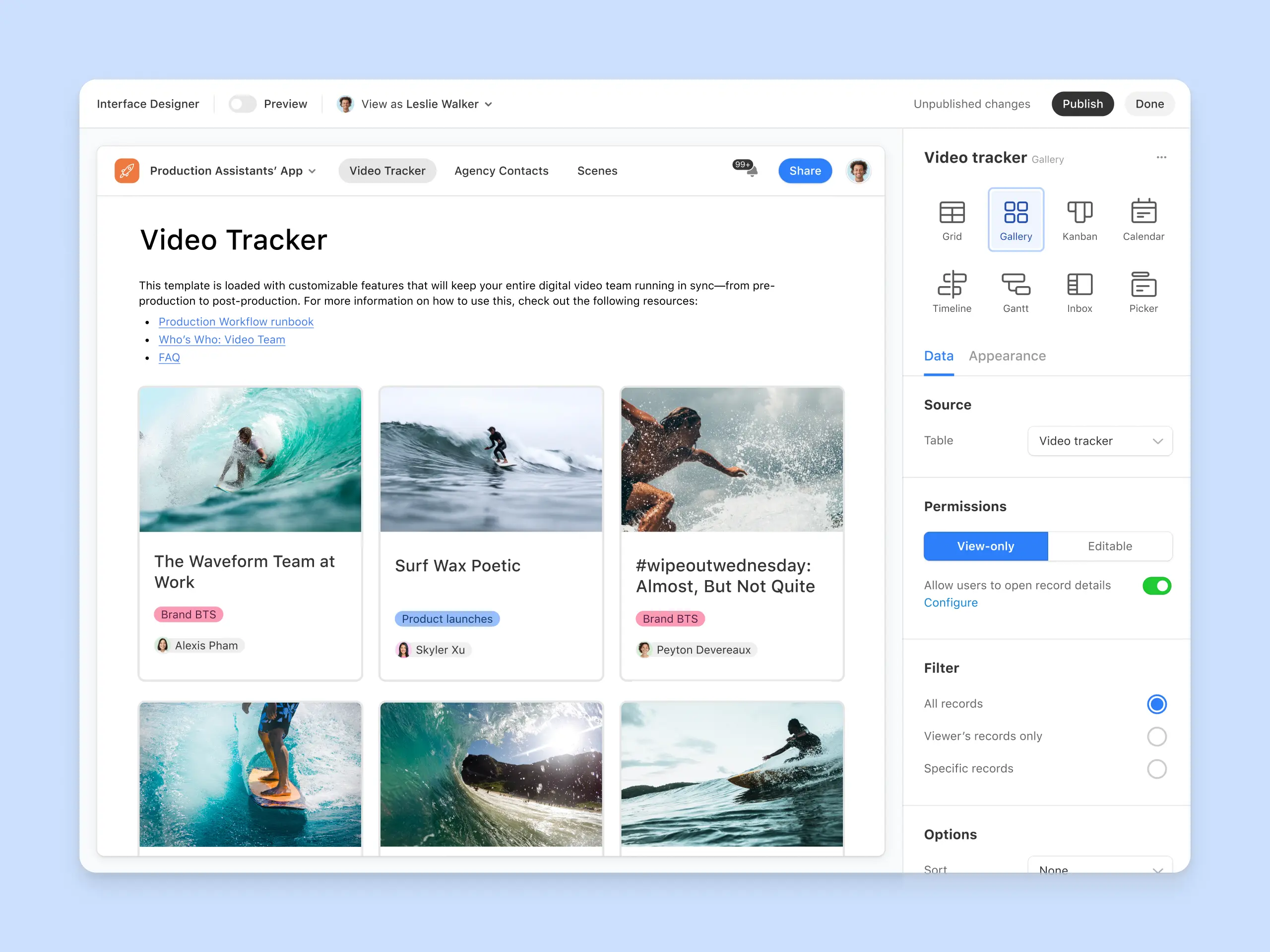
Bottom line: Interface Designer is Airtable's built-in tool for dashboards and simple apps on top of a base. It works well when everyone using the app already has an Airtable seat.
Where Airtable beats Softr:
- Teammates who only view an interface don't need a paid seat on Team and Business
- No second tool to learn if your team already lives in Airtable
Where Softr is better:
- External users log in to Softr apps without an Airtable seat. Airtable's Portals add-on starts at $120/month for 15 guests
- Softr combines Airtable with other data sources in one app
- Softr's user groups control what each person sees, down to the record-level
Who Airtable Interface Designer is not for: Teams building client portals, or apps that need data pulled into one place from multiple tools.
Pricing: Free plan with up to 5 editors. Team is $20/seat/month and Business is $45/seat/month, billed annually, with Portals as a paid add-on.
Verdict: Choose Interface Designer if your users are already Airtable collaborators and you only need shared views of one base.
👉 See this Softr vs Airtable page for a more in-depth comparison, or check out the best Airtable alternatives.
What you keep by staying on Softr
Before you switch, it's worth knowing what Softr covers in one platform, so you can check each alternative against it:
- AI Co-Builder: Describe the app, and Softr generates the database, pages, and logic. Switch to the visual editor at any point without re-prompting.
- Softr Databases: A native relational database with linked records, lookups, and rollups. Softr also connects to 21+ external sources, including Airtable, Google Sheets, Notion, and SQL databases.
- Softr Workflows: Automations triggered by app actions or data changes, with no separate automation tool.
- Softr MCP: Build databases, apps, and workflows from Claude, Cursor, or ChatGPT. Everything the agent builds runs on Softr, with the same login, permissions, and hosting.
- Softr Agents: AI agents that act on behalf of users inside your apps or run on a schedule. They act as the signed-in user, so they only see and change what that person can.
- Permissions: User groups decide what each person sees and edits, so clients, vendors, and staff can share one app.
- Pricing by app users: App users split into team and client users, and every plan includes unlimited apps, databases, and workflows.
How to choose the best Softr alternative for your business
The right alternative depends on what you're building and how technical your team is. If you need a custom product or a native mobile app, Bubble gives you the most control, and Retool suits teams with engineers on hand. Just remember that the tradeoffs are steeper learning curves and more setup time.
If your users are mostly on mobile and your data sits in a spreadsheet, Glide can be a the quick route to a basic app. Stacker fits teams that mainly want AI agents. And if everyone already works in Airtable, its Interface Designer can be a good way to visualize a database.
For client portals, CRMs, dashboards, and internal tools that a non-technical team can build and maintain, Softr remains the strongest fit. It combines a native database, live connections to the tools you already use, loads of AI features, and per-record permissions in one secure, IT-friendly platform.
👉 Ready to get started? Try Softr's AI Co-Builder and create working software in minutes, with no technical setup required.
Frequently asked questions
What’s the best tool like Softr for building custom web or mobile apps?
Is there a Softr alternative that works offline?
How does Softr pricing compare with other platforms?
Is there a free version of Softr?
Which is better, Glide or Softr?